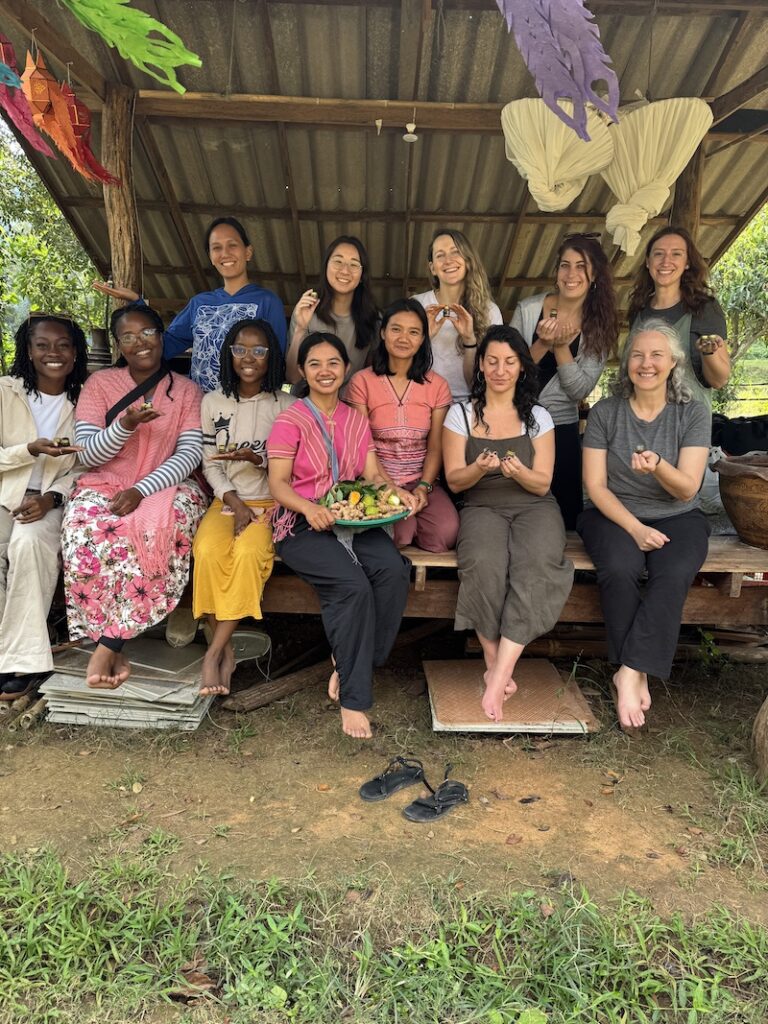
What is a master’s degree in global health?
At NUNM, our Master of Science in Global Health (MScGH) is a unique program that takes our core philosophy of advancing education, healthcare and research in the art and science of natural medicine and applies it to the world at-large.
Students will gain an understanding of the different ways in which global and national systems contribute to health problems, how to evaluate diverse healthcare systems, and learn how to design culturally appropriate, evidence-based approaches to creating sustainable programs and policies.
What makes the NUNM Master of Science in Global Health unique?
NUNM takes a whole-systems approach in our MScGH program, where we combine critical elements of contemporary public health applications with more traditional, global health practices.
Students will gain knowledge of the similarities and disparities across global health systems, become proficient in subjects including epidemiology and biostatistics, learn culturally minded communication skills and ethical considerations as they pertain to global healthcare, and design health programs and policies that aim to improve global health.
How long does it take to earn a global health master’s degree?
The MScGH program is a two-year, 62-credit curriculum.
Currently the Master of Science in Global Health program is an online learning experience. Though some classes are conducted via virtual meetings, the program is largely asynchronous, allowing students to set their own schedules and work independently.
Prospective students are reminded that the coursework is rigorous and that, despite the flexibility of the MScGH program, strict self-management is key to having a successful experience.
Although much of the program is conducted online, year-two of the MScGH program includes hands-on work experience in the second year of its curriculum.
How much does the NUNM MScGH program cost per credit?
Currently, it is $538 per-credit.
Prospective students also have the option to learn more about our financial aid and scholarship opportunities.
What is the curriculum like in NUNM’s MScGH?
Due to the global nature of the Master of Science in Global Health program, our curriculum is diverse, encapsulating a wide range of knowledge and skills.
Students should be prepared to learn a wide range of traditional, alternative, and integrative health and medical philosophies across an equally wide range of settings.
Though learning throughout the program is largely independent and online, there is a deep emphasis on collaboration, communication, and cultural & ethical considerations, given its core goal of improving health and wellness around the world.
One of the final projects of the program is a guided health experience course, conducted either in the United States or abroad, designed to help students apply their knowledge in a supervised, real-world setting, where they’ll gain an even deeper understanding of today’s current global health challenges.
NUNM’s Master of Science in Global Health curriculum includes:
- Social and Behavioral Foundations of Health
- Principles of Epidemiology
- Introduction to Integrative Health and Medicine
- Bioethics
- Technical Writing
- Public Health Policy
- Comparative Global Health Systems
- Grant Writing
- Fieldwork Presentation
Learn more about NUNM’s MScGH curriculum
What career outcomes are associated with an MScGH?
Graduates of the MScGH program are prepared for diverse careers in:
• Global and community health organizations
• Public health agencies
• Nonprofit and humanitarian organizations
• International development programs
• Research and academic settings
• Health policy and advocacy
• Integrative and traditional medicine initiatives
The program also complements careers in healthcare, nutrition, naturopathic medicine, acupuncture and Chinese medicine, wellness, and related health professions.
What does the MScGH field work project look like in practice?
We believe that experiential learning is a critical component of the MScGH program. After students have completed foundational coursework, students are tasked with creating and executing their unique fieldwork project.
The field work project — called the Global Health Experience Trip — is supervised, hosted in a practice-based setting, and can take many forms. The Master of Science in Global Health program is focused on the needs and realities of communities all around the world, including underserved communities in the U.S.
Most commonly, the Global Health Experience Trip is an 8–10-week experience. Historically, these working trips have been hosted in Africa, Latin America, Asia, and here in the U.S.
Past projects have included community health initiatives, public health outreach and education, nonprofit and NGO partnerships, and more.
This portion of the program is not about observation, it’s about actively working in these communities to run education programs, conduct surveys, gather research, engage in health and medical-centered community organizing, and promote health policies or programs in order to build professional skills while gaining cross-cultural competency.
Though MScGH students are given preference, all NUNM students (and even eligible non-students) are invited to participate in our global health immersion programs, designed to provide you with firsthand insight into community health systems, traditional medicine, and the social determinants of health.
Financial aid packages are applicable for trips of this nature.
Learn more about NUNM’s international travel opportunities
Apply now to become a Master of Science in Global Health at NUNM
The time is now to take the next step in your education and career, so you can finally make an impact in the health and wellness of individuals around the world. Contact us today to learn how.