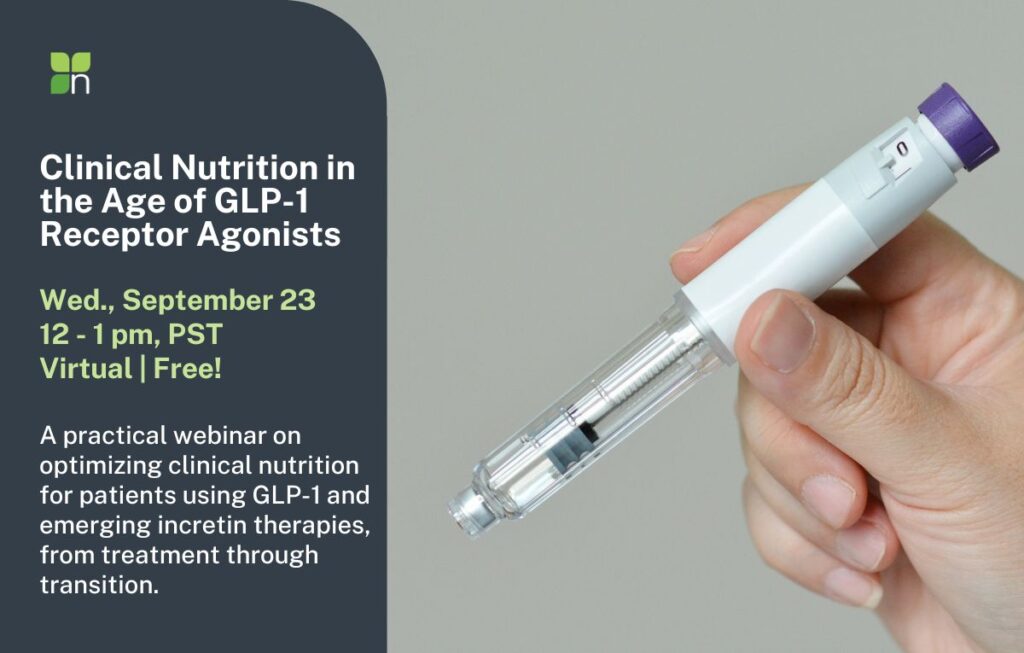
A practical webinar on optimizing clinical nutrition for patients using GLP-1 and emerging incretin therapies, from treatment through transition.
Wednesday, September 23 |12 – 1PM, PST
Virtual | Free to attend, but registration is required
GLP-1 receptor agonists (semaglutide, tirzepatide) and emerging multi-agonists (retatrutide, orforglipron) have produced weight-loss outcomes that approach those of bariatric surgery and have shifted the standard of care for obesity and type 2 diabetes within a single decade. The clinical nutrition implications are equally large and, in important ways, underappreciated.
This talk, Clinical Nutrition in the Age of GLP-1 Receptor Agonists, walks through the pharmacology of incretin-based therapies along the gut-brain axis, examines the body composition, micronutrient, and tolerability data emerging from the STEP, SURMOUNT, and SELECT trials, and translates these findings into a working clinical nutrition framework. Particular attention is given to lean mass preservation, micronutrient adequacy under sustained caloric restriction, GI symptom management, food aversion strategies, and the nutrition-modifiable risks of treatment discontinuation. The aim is to equip practitioners across disciplines to provide nutrition care that meaningfully changes outcomes for patients on, transitioning off, or considering these therapies.
Speaker: Brice Thompson, ND, MS

Dr. Brice Thompson, ND, MS, is a naturopathic physician, researcher, and educator with expertise in clinical nutrition, pharmacology, and microbiome science. He completed his doctoral and master’s training at the National University of Natural Medicine and pursued postdoctoral research at the University of Washington through the NIH-funded BRIDG program. Dr. Thompson currently serves as Chief Scientific Officer at Thaena, Inc., and sees patients part-time with a focus on gut health and FMT therapy. As an adjunct faculty member at NUNM, he teaches immunology and pharmacology, bringing a rigorous, evidence-based approach to integrative medicine.