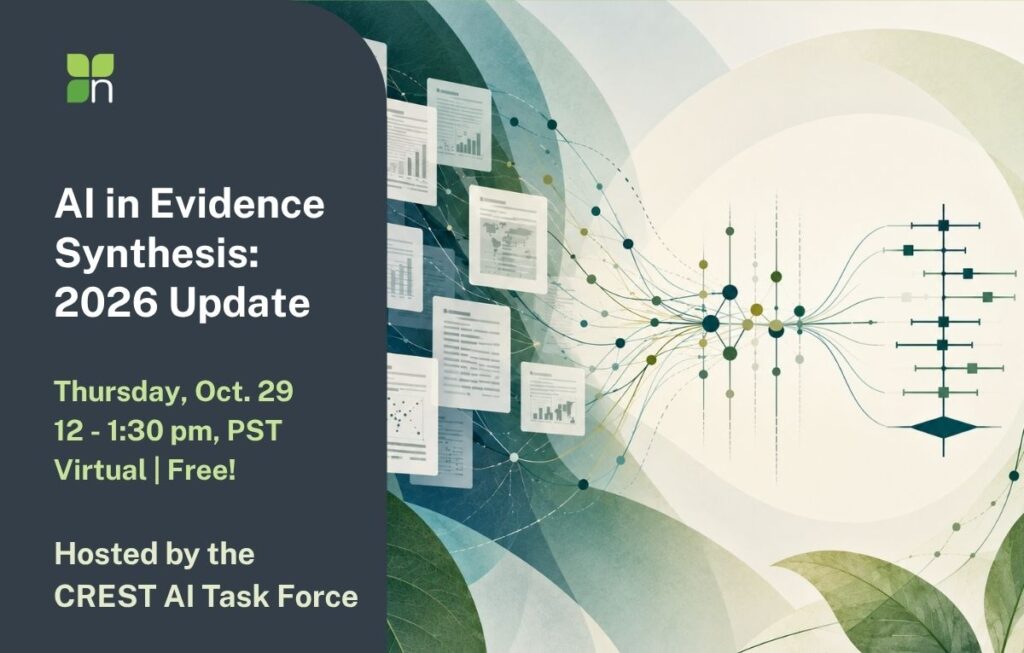
AI tools for research are changing faster than most reviewers can keep up. This 90-minute seminar starts with the fundamentals (how today’s AI technologies work, where they fail, and why that matters) and then shows how they apply in the systematic review tools researchers use now.
Hosted by the CREST AI Task Force
Thursday, October 29, 2026 | 12:00 – 1:30 PM, PST
Virtual | Free – but registration is required
About this session:
This session covers AI tools in practice. Invited speakers walk through AI agents, retrieval-augmented generation (RAG), and corrective RAG (CRAG), and how each fits into a review workflow.
What’s changed since our last seminar. New tools, new studies, emerging guidance, and practical advice on using them well, presented by CREST AI Task Force members.
Open discussion and Q&A. Bring your questions about using AI in your own reviews.
Anyone doing evidence synthesis will find it useful, especially researchers in complementary and integrative health (CIH), where grey literature and non-English sources add extra challenges.
Speakers
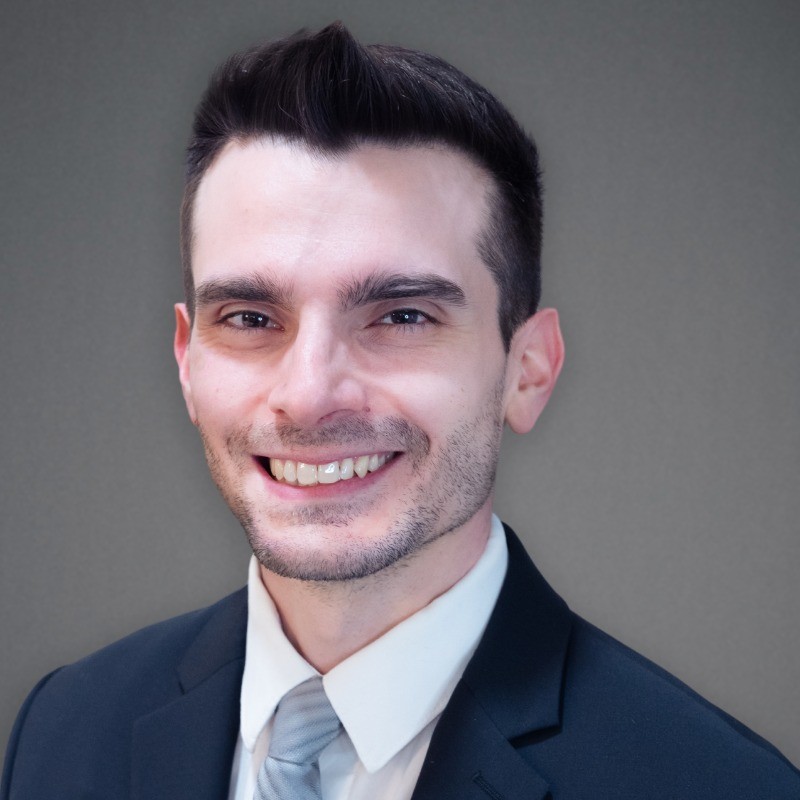
Giacomo Nebbia, PHD University of Colorado Anschutz
Deep learning and large language models

Steven Chamberlin, PhD Oregon Health & Science University
Machine learning and natural language processing

Joshua Goldenberg, ND Helfgott Research Institute, NUNM
Director of Research, Director, CREST
Riaz Qureshi, PhD University of Colorado Anschutz Medical Campus

Alisha Bruton, ND, MS
Oregon Health & Science University, NUNM
Research Scientist and Biostatistician, CREST Director of Methods